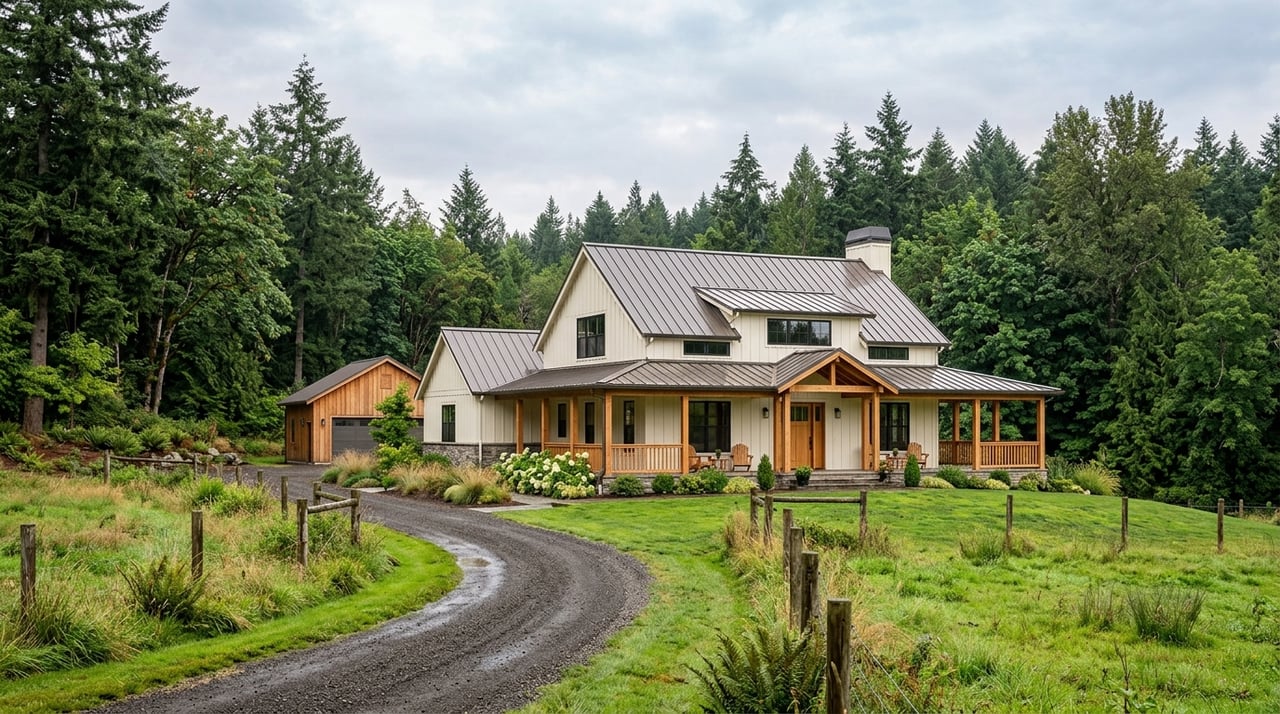
Dreaming about open space near Blaine? It is easy to fall for the view, the privacy, or the idea of room for hobbies, animals, or a future shop. But when you buy acreage and lifestyle property around Blaine, the land itself often matters as much as the house. If you know what to check before you write an offer, you can move forward with far more confidence. Let’s dive in.
Why Blaine acreage needs extra homework
Acreage around Blaine is often parcel-specific. Two properties that look similar online can have very different utility access, zoning rules, permit paths, and development limits.
Inside the City of Blaine, the city maintains electric, water, sewer, and stormwater utilities for more than 3,500 residential and commercial accounts. Outside city service areas, buyers may need to look to other providers, including Puget Sound Energy for power and Birch Bay Water and Sewer District for water and sewer, depending on location.
That means your first questions should go beyond square footage and finishes. You want to understand who serves the property, what the land can support, and whether your plans match current county or city rules.
Start with location and jurisdiction
One of the most important first steps is figuring out exactly where the parcel sits. Is it inside Blaine city limits, in a county rural zone, or in an Urban Growth Area?
Whatcom County’s zoning maps and Property Portal can help show parcel data and zoning. The county also notes that zoning questions for incorporated Blaine should go to the city, which is an important distinction because the rules and review process can change based on jurisdiction.
For buyers, this matters because the answer affects more than paperwork. It can shape utility options, building rules, and what changes may be allowed later.
Utilities can define the property
With lifestyle and acreage property, utility access is often a major part of the value. A beautiful parcel may still need careful review if power, water, sewer, or stormwater service is not straightforward.
Inside Blaine, the city handles core utility services. The city water system is supplied by nine deep-production wells in a forested watershed, and city utility service can be a meaningful advantage for buyers who want more predictable infrastructure.
Outside city service areas, the path can look different. Birch Bay Water and Sewer District says it serves about 7,700 connections in northwest Whatcom County, and most of that footprint lies within an Urban Growth Area.
If a parcel is in a public water service area and the system is willing and able to connect in a timely and reasonable manner, Whatcom County says the property must connect. For permit review, a Public Water Availability Form is required.
What to ask about utilities
- Who currently provides power, water, and sewer service to the parcel?
- Is the property inside a formal service area?
- Is there an availability letter or water availability form on file?
- If service is possible, what steps are still required before connection?
For properties in the Birch Bay Water and Sewer District, availability letters are only issued when the parcel is in the district’s approved service area. The district also says those letters are generally valid for up to one year and do not guarantee service until connection.
Water and wells deserve close attention
If the property is not served by public water, your due diligence should focus quickly on the well. Whatcom County keeps online records for approved water availability forms, plats, and septic and drinking water records, which can be very helpful during your review period.
If no well log can be found, the county says a new well may be required. The county also requires a well site inspection for a new or existing well during site-plan review.
Setbacks matter too. Wells must meet spacing rules from drainfields, septic tanks or pump tanks, sewage transport lines, roads, and property lines.
Washington Department of Health guidance recommends annual testing for coliform bacteria and nitrate for private wells. It also suggests arsenic testing at least twice while you own the property.
Water questions to answer early
- Is there a recorded well log?
- Has the water been recently tested?
- Is the well location compatible with septic setbacks and future plans?
- If there is no clear record, what would be required to establish a compliant water source?
These questions are especially important if you hope to add structures later. A future barn, shop, or home addition can be affected by where water and septic systems sit today.
Septic is not a side issue
For many Blaine-area acreage properties, septic is one of the most important systems on the property. You do not want to assume it works, assume it is properly sized, or assume records will be easy to find.
Whatcom County keeps online records for approved on-site sewage permits and reports of system status. Before you get too attached to a property, it is wise to confirm what documentation exists and whether the system appears to match the current use of the property.
Washington Department of Health says gravity septic systems should be inspected at least every three years, while other systems should be inspected annually. The agency also notes that most tanks are pumped every three to five years depending on use.
If you are considering animals or hobby farming, septic layout matters even more. DOH specifically advises keeping heavy equipment and livestock off the tank, drainfield, and replacement area.
Septic items to review
- Approved septic permit
- System status report
- Maintenance and pumping history
- Location of the tank, drainfield, and replacement area
- Whether planned uses could interfere with the system
Acreage can give you flexibility, but only if the usable portion of the parcel supports how you want to live.
Access and fire review matter more than many buyers expect
Road access can be easy to overlook when a property feels private and peaceful. But Whatcom County’s site-plan review specifically looks at road access, fire safety and access requirements, drinking water, septic or sewer installations, and structure placement relative to critical areas and natural resources.
This matters if you are thinking about a long driveway, a detached shop, a barn, or future grading work. Access is not just about convenience. It can affect permit review, emergency response, and the practical use of the land.
For parcels in the Birch Bay Water and Sewer District, the district also says it does not provide reliable fire protection outside its service area. That is another reason to verify service assumptions early instead of relying on general area expectations.
Critical areas can shape what is usable
One of the biggest surprises for acreage buyers is that lot size and usable land are not always the same thing. Whatcom County’s Critical Areas Ordinance applies to wetlands, geologically hazardous areas, frequently flooded areas, critical aquifer recharge areas, and fish and wildlife habitat conservation areas.
If a parcel includes one or more of these features, building and land changes may be limited or require additional review. In frequently flooded areas, the county says development must mitigate flood hazards and conform to county flood code.
This is why a larger parcel is not automatically simpler. Depending on the site, setbacks, buffers, and environmental constraints may reduce where improvements can go.
Watch for these common land constraints
- Wetlands and wetland buffers
- Flood-prone areas
- Geologically hazardous areas
- Habitat conservation areas
- Critical aquifer recharge areas
If your dream includes a new outbuilding, expanded driveway, or site work, these details should be checked before your plans feel set in stone.
Shoreline property needs updated review
Waterfront and near-water acreage can be especially appealing around Blaine, Drayton Harbor, and Birch Bay. It can also come with more regulation than buyers expect.
Whatcom County’s Shoreline Management Program regulates marine shorelines, certain streams, lakes over 20 acres, and associated wetlands and floodways. Shoreline jurisdiction extends 200 feet landward from the ordinary high-water mark.
The county emphasizes that shoreline modification should be limited and that soft stabilization is preferred when possible. It also notes that bulkheads, drainage concentration, road cuts, excavation, fill, and vegetation removal can contribute to erosion or landsliding.
Eelgrass beds may be found along much of Whatcom County’s marine shoreline, including near Drayton Harbor and Birch Bay. That is a useful reminder that shoreline habitat can affect what changes may be reviewed or limited, even when your main focus is view, privacy, or access.
The county’s Shoreline Management Plan update took effect March 13, 2025, and included changes to nonconforming residential structures and dock and moorage standards. If you are considering older waterfront property, it is smart to recheck assumptions under current code.
Match the land to your lifestyle
A great lifestyle property is not just attractive on paper. It fits how you actually want to use it.
If you picture animals, workshop space, or future outbuildings, you will want to confirm that septic areas, access routes, utility locations, and regulated areas all leave enough practical room. If you picture a quiet retreat with minimal maintenance, public utility service and easier access may matter more than having the largest parcel available.
This is where a calm, no-pressure buying process really helps. Rather than rushing toward the prettiest listing, you can compare what each parcel realistically supports.
A smart Blaine acreage checklist
Before making an offer, try to answer these questions:
- Is the parcel inside Blaine city limits, in a county rural zone, or in an Urban Growth Area?
- Which providers serve power, water, and sewer today?
- Is the property in a public water service area, and is connection required?
- Is there a recorded well log and current water testing information?
- Is there septic documentation, including permit and status records?
- Does the parcel fall within shoreline jurisdiction or another critical area?
- Could planned improvements affect access, fire review, buffers, or septic placement?
- If animals are part of your plan, where are the drainfield and replacement area?
When these answers line up, you can evaluate the property with much more clarity. That is often the difference between buying land that simply looks good and buying land that truly works for your goals.
Why guidance matters with lifestyle property
Buying acreage around Blaine can be rewarding, but it usually takes more nuanced review than a typical in-town purchase. The goal is not to make the process feel harder. The goal is to help you ask the right questions early so you can move forward with confidence.
A relationship-driven advisor can help you stay focused on the full picture, including location, service areas, property records, and the practical fit between the land and your plans. That kind of steady guidance matters when each parcel tells a different story.
If you are exploring acreage or lifestyle property around Blaine and want a calm, informed approach, Donita Dickinson is here to help you evaluate your options with clarity and care.
FAQs
What makes buying acreage around Blaine different from buying a standard home?
- Acreage properties around Blaine often require more parcel-specific review because utilities, zoning, access, shoreline rules, and critical areas can vary significantly from one property to the next.
What should buyers check first on a Blaine lifestyle property?
- Start by confirming the parcel’s jurisdiction, zoning, utility providers, water source, septic records, and whether the land is affected by shoreline or critical-area regulations.
How do water service rules work for Blaine-area acreage?
- If a property is in a public water service area and the system is willing and able to connect in a timely and reasonable manner, Whatcom County says the property must connect, and a Public Water Availability Form is required for permit review.
What septic records should buyers review for acreage in Whatcom County?
- Buyers should look for the approved on-site sewage permit, system status reports, maintenance history, and the location of the tank, drainfield, and replacement area.
Why do shoreline rules matter for waterfront property near Blaine?
- Shoreline jurisdiction can affect additions, grading, stabilization, docks, vegetation removal, and other changes, and Whatcom County updated parts of its Shoreline Management Plan in 2025.
Can animals affect how you use acreage near Blaine?
- Yes. If you plan to keep animals, it is important to know where the septic drainfield and replacement area are located because Washington Department of Health guidance says livestock should be kept off those areas.