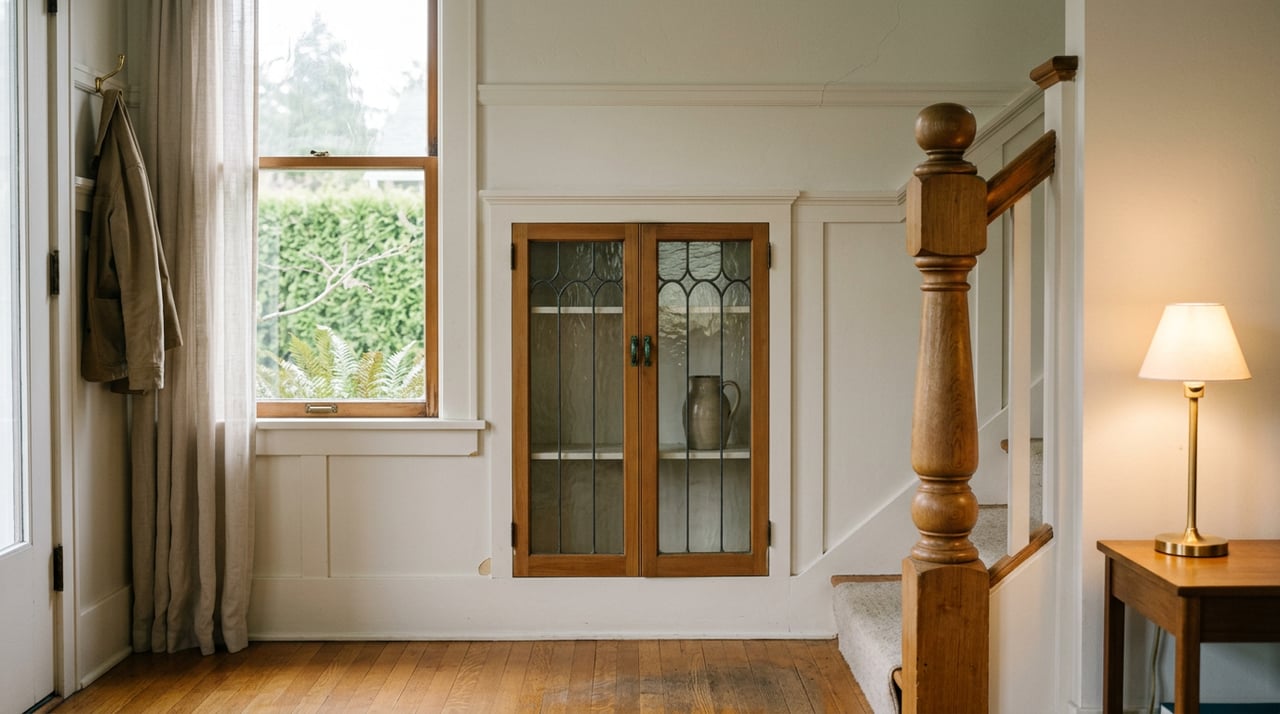
A general home inspection in Seattle looks up, through the attic, and around, along the foundation wall and behind the electrical panel cover. It does not look down, into the pipe running from the house to the street. And in a home with finished plaster walls, it often cannot see what wiring is still active behind them. In a neighborhood built mostly between the 1920s and the 1950s, that gap is where a Ballard sale either goes smoothly or falls apart in week two of escrow.
Buyers walk out of a clean-sounding inspection assuming the house has been checked. Sellers fill out a disclosure form assuming honesty is the same as certainty. Neither assumption holds up once you look at how Washington's own paperwork is built, and understanding that gap matters more for a Ballard transaction than almost anywhere else in King County, because so much of the housing stock here predates the systems modern inspections were designed around.
What a Standard Inspection Actually Covers
Washington-licensed home inspectors work under a Standards of Practice that limits their report to conditions that are visible and reasonably accessible at the time of the walkthrough. That is the entire job description. An inspector will note a two-prong outlet or a knob-and-tube run visible in an unfinished basement ceiling. They generally cannot tell you how much of that wiring continues, unseen, behind finished walls and ceilings elsewhere in the house. And the side sewer, the pipe carrying wastewater from the home to the city main, sits underground for its entire length. A general inspection does not include it at all.
Homeowners in Seattle own that pipe outright, from the house to the point where it connects to the public main, according to Seattle Public Utilities. If it fails, the repair bill belongs to the property owner, not the city. That single fact is why a sewer scope, a camera run through the line, has become close to standard practice for pre-1960s inventory across Seattle's older neighborhoods. It is also why so many buyers are surprised to learn it is not part of what they already paid for.
The Sewer Scope Is an Opt-In, Not a Given
Washington's standard purchase contract uses NWMLS Form 35, the Inspection Addendum, to set up the buyer's due-diligence period. It defaults to a 10-day window unless the parties agree to something different. What trips people up is what Form 35 does and does not include automatically.
| Covered by a standard Form 35 inspection | Requires a separate line item |
|---|---|
| Structure, roof, electrical panel, plumbing fixtures, heating | Sewer scope (side sewer lateral) |
| Visible wiring in accessible areas (attic, unfinished basement) | Septic or well testing |
| General condition and safety flags | Pest inspection in most cases |
A sewer scope has to be specifically selected on the form. If it is not checked, it is simply not part of what the buyer's inspector is contracted to look at. For a Ballard craftsman with a century-old clay or cast-iron lateral, that is the difference between catching a problem during the contingency period, when it is still negotiable, and discovering it two months after closing, when it is entirely the new owner's cost.
What Skipping It Actually Costs
A sewer scope typically runs about $250 to $500. A failed lateral, once it is your problem instead of a negotiating point, typically runs $8,000 to $20,000 depending on depth, length, and how hard the line is to access.
One documented case makes the math concrete. A buyer purchased a 1925 home in Green Lake, a neighborhood with the same construction era and pipe materials common throughout Ballard, without ordering a scope. Two months after closing, the side sewer collapsed under the sidewalk. The repair came to $28,000. The defect would very likely have shown up on camera during the inspection period, when it could have been negotiated into the price or handled by the seller before closing.
That is not a reason to panic about buying an older home in Ballard. It is a reason to treat the scope as a line item you add, not a box you assume is already checked.
The Disclosure Form Creates a Strange Incentive
Washington sellers complete Form 17, a disclosure statement governed by state law, listing known defects, structural issues, and system problems. Here is the part that catches people off guard: the statute requires sellers to disclose what they actually know. It does not require them to go find out.
That distinction creates a genuine paradox for anyone selling an older Ballard home. If a seller orders a pre-listing sewer scope or a licensed electrician's evaluation of the wiring, and the report turns up a problem, that seller now has actual knowledge, and the law requires them to disclose it. If that same seller never orders the inspection, "don't know" is a legally honest answer on Form 17, even if the same defect is sitting in the ground or behind the wall the whole time.
A pre-listing inspection is a choice to create knowledge. Once it exists, the seller has to disclose it. Skipping it does not make the defect disappear. It just keeps it out of the paper trail.
This is why a clean Form 17 on an older Ballard listing tells a buyer less than it sounds like it does. It can mean the home genuinely has no known issues. It can also mean the seller never looked closely enough to have one to report. Buyers who treat a clean disclosure form as equivalent to a clean house are skipping the step that actually protects them: their own inspection, done during their own contingency period, on their own timeline.
Washington's disclosure duty and the buyer's duty to investigate work as a pair, not a substitute for each other. Courts have consistently sided against buyers who skip a follow-up inspection their own inspector recommended and then try to claim an undisclosed defect later. Doing the digging yourself, rather than relying on what the seller chose to find, is what keeps a transaction defensible for either side.
Knob and Tube Has a New Complication This Year
Wiring adds a second layer to this. Active knob-and-tube, still common in Ballard homes from the 1920s through the 1950s, has always been a point of buyer negotiation. What has changed in 2026 is the insurance market around it. A growing number of carriers are issuing flat denials on active knob-and-tube systems, and some now require full replacement within a defined window after closing, in some cases as tight as 30 days, before coverage takes effect.
That matters beyond the repair bill. If a buyer cannot secure homeowner's insurance, a lender will not fund the loan. The wiring stops being a repair negotiation and starts being a condition of whether the deal can close at all, particularly for FHA and VA financing, which tends to stall hardest when active knob-and-tube turns up.
Rewiring an older Ballard bungalow once knob-and-tube turns up during inspection typically runs $15,000 to $25,000, with two-story homes behind finished plaster walls trending toward the higher end because of the access work involved. Getting two written quotes from licensed electricians before negotiating is worth the extra week, since the spread between bids on the same house can be wide enough to change the outcome of a credit request.
The Clock That Actually Protects You
Once a buyer's inspector flags something, Form 35 sets tight, non-repeating deadlines. The seller typically has 3 days to respond to a repair or credit request, and the buyer then has 3 days to reply. Miss either window and the contingency simply evaporates, taking the negotiating leverage with it. If an inspector recommends a further evaluation, a structural engineer or a specialist electrician, the buyer can request an additional 5 days, but only if that request is made before the original clock runs out.
None of this is a reason to fear an older Ballard home. It is a reason to walk in knowing exactly which boxes need checking on Form 35, and to treat a seller's disclosure as a starting point for your own due diligence rather than a substitute for it.
A Few Straight Answers
Does a seller have to get a sewer scope before listing? No. Nothing in Washington law requires it. Some sellers choose to anyway, so they can price around a known issue or fix it before a buyer's inspector finds it. Others choose not to, for the disclosure reasons above.
Can a buyer add a sewer scope after the inspection period has already started? Only if it is negotiated into the Form 35 timeline up front or the parties agree to extend it. This is why it is worth deciding before the offer goes in, not after the general inspector is already on-site.
Does active knob-and-tube automatically kill a deal? Not automatically. Most buyers and sellers work it out through a credit, a price adjustment, or occasionally a pre-closing repair. What has changed is that insurance denial, not just repair cost, can now be the thing that ends a deal if it is not addressed early.
Working Through the Details
Older homes are a large part of what makes Ballard worth buying into, the scale of a 1920s bungalow, the settled block, the walk to the water. None of that changes the fact that the paperwork governing a Ballard sale rewards buyers and sellers who understand exactly what it does and does not check for. If you are getting ready to list a Ballard home or make an offer on one, Donita Dickinson can walk through the inspection and disclosure timeline with you before the clock starts, not after. Start with a Get a Free Home Valuation conversation and bring your questions about what a Ballard-specific inspection strategy should look like for your situation.